


If you’ve ever thought about learning Data Analytics but immediately felt overwhelmed, you’re not alone.
Maybe you’re juggling a full-time job, family responsibilities, or studies. Maybe the word “Analytics” sounds too technical, or you’re unsure where to even begin.
Here’s the reassuring truth: Data Analytics is absolutely learnable, even if you have no technical background. You don’t need to be a math genius or a programmer to get started. What you do need is a clear path—and the flexibility to learn without pressure.
That’s exactly what this guide offers. We’ll walk through how to learn Data Analytics step by step, in a way that fits into your life—not the other way around.

What Is Data Analytics?
Data Analytics is simply about understanding information to make better decisions.
Every day, data is created when people shop online, use apps, browse websites, or track their fitness. Data analytics turns this raw information into useful insights.
For example:
- Businesses use data to understand drops in sales
- Marketing teams see which ads work best
- Healthcare providers improve patient care
- Streaming apps suggest shows you’ll enjoy
Because data is used everywhere, Data Analytics skills are valuable across industries—from tech and healthcare to finance, education, and retail.
Why Learning Data Analytics at Your Own Convenience Matters
Traditional classroom learning doesn’t work for everyone. Fixed schedules, fast-paced lessons, and limited revision time can quickly lead to stress or burnout—especially for adults.
Here’s why flexibility matters:
- You can learn alongside a full-time job without feeling rushed
- You can pause, rewind, and revisit lessons whenever needed
- You move at your own pace—slow where it’s tricky, fast where it clicks
- You avoid burnout by learning in manageable chunks
This is exactly the kind of flexibility Syntax Technologies offers through its self-paced Data Analytics course, designed to fit learning into real-life schedules rather than forcing learners to rearrange their lives.
A Step-by-Step Guide to Learning Data Analytics
Step 1: Start by Understanding What Data Really Is
Before jumping into tools, it’s important to understand what “data” actually means in real life.
Data can be numbers, text, categories, or even simple yes/no answers. Learning how data is collected and used helps you think like an analyst from day one. This stage is about clarity, not complexity.
Step 2: Build Comfort with Core Tools
Once the basics are clear, it’s time to get hands-on with foundational tools. You don’t need to learn everything at once. Most beginners start with:
- Spreadsheets like Excel for organizing and analyzing data
- Basic SQL to work with databases
- Simple statistics to spot patterns and trends
These tools are widely used in real jobs. With self-paced learning, you can practice them gradually, repeat exercises, and build confidence without pressure.
Step 3: Learn How to Visualize Data Clearly
Data only becomes powerful when people can understand it. That’s where visualization comes in.
At this stage, you’ll learn how to turn numbers into charts, build dashboards, and present insights in a way that tells a clear story. Visualization skills grow through experimentation and practice.
This is also where focused learning experiences—like the Advanced Data Visualization with GenAI workshop by Syntax Technologies—can be especially helpful. In this workshop, learners build inspiring dashboards similar to what seasoned data analysts create.
Step 4: Think Like an Analyst, Not Just a Tool User
Knowing tools isn’t enough. Real analytics involves asking the right questions and interpreting results.
You’ll start learning how analysts approach problems:
- What question is the business trying to answer?
- What data actually matters?
- What do the results mean in real-world terms?

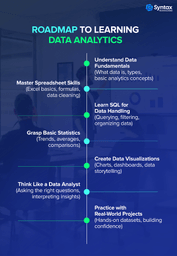
Step 5: Practice with Real-World Projects
This is where learning starts to feel real.
Working on hands-on projects helps you:
- Apply what you’ve learned to real datasets
- Understand how messy data can be
- Gain confidence by solving practical problems
Step 6: Reinforce Skills Through Repetition and Self-Practice
Confidence in data analytics doesn’t come from moving fast—it comes from consistent practice. Revisiting lessons, reworking examples, and spending extra time on topics that feel challenging all play a big role.
Self-paced learning makes this possible because you’re not pushed forward before you’re ready. You decide when to review, when to practice more, and when to move ahead.
Common Beginner Challenges—and How Self-Paced Learning Solves Them
Many beginners worry:
- “I’m not from a technical background.”
- “I don’t have enough time.”
- “I’ll forget what I learn.”
Self-paced learning directly addresses these fears:
- Concepts are explained in simple language.
- Learning fits around your schedule.
- Lessons can be revisited anytime, improving retention.
Instead of stress, you get control over your learning experience.
Conclusion
Learning Data Analytics doesn’t require quitting your job, going back to school full-time, or turning your life upside down. With the right step-by-step approach—and the freedom to learn at your own pace—it becomes far more approachable and enjoyable.
If you’re ready to start this journey in a way that fits your schedule and learning style, exploring a self-paced Data Analytics course can be a practical next step. Learn when you’re ready, revisit when you need to, and build skills that open doors—on your own terms.